
Skip to content
MANUFACTURING

Manufacturing plant security and business continuity for resilient operations 

Crane Currency and leading manufacturing and FMCG companies use the Human Risks security and resilience platform to manage physical security risk and business continuity across every plant and supply route.
Human Risks for Manufacturing

Physical security and business continuity in one platform

Physical security and business continuity teams in the manufacturing industry protect plants and the goods that move between them. When one plant stops, other businesses further down the supply chain feel it. Human Risks helps them run plant security and business continuity the same way at every site, with the audit evidence in one platform. Today the platform supports security programmes at more than 7,500 sites worldwide.

What's at stake


108,000+

thefts from supply chains in Europe, the Middle East and Africa in two years (TAPA EMEA)


€1 billion+

in losses from just the 5% of those thefts that reported a value (TAPA EMEA)


Nine figures

the business interruption loss across one group after a fire at a single small manufacturing unit (Allianz Commercial)

Physical security helps protect goods in the plant and on the road, and business continuity planning prepares a manufacturer to keep customers supplied when a plant stops.

Top 3 security challenges for the manufacturing industry

01
Disruption that travels down the supply chain

Business interruption, including supply chain disruption, ranks second for manufacturing in the 2026 Allianz Risk Barometer. A fire at Novelis' aluminium plant in Oswego, New York, led Ford to expect a $1.5 billion to $2 billion hit to its 2025 adjusted earnings before interest and taxes (Ford). Assessing each plant on its own misses the supplier whose stoppage would halt it.

02
New rules reach every plant

Changes in legislation and regulation rank among the top three risks for manufacturing in the 2026 Allianz Risk Barometer. Customers and customs authorities add their own demands: TAPA's facility security standard calls for a yearly risk assessment, and the EU's Authorised Economic Operator status requires appropriate security and safety measures. With evidence kept in spreadsheets at each plant, every audit means chasing documents.

03
One plant down, the whole group pays

Fire and explosion caused more than 40% of the value of business interruption losses that Allianz Commercial analysed over five years. Each plant needs a business continuity plan for its critical activities and the customers who depend on them. Separate plans at each plant fall out of date as production changes.

How Human Risks helps

CHALLENGE

A stoppage at one supplier or plant soon reaches the production line

HOW HUMAN RISKS SOLVES IT

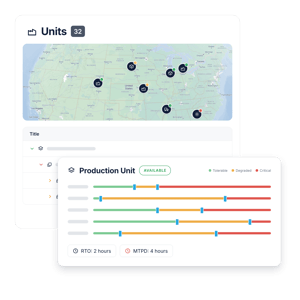
Business impact analysis identifies the critical operational assets each plant depends on, and risk assessments apply one method to every plant, with every mitigation measure tracked to completion.

CHALLENGE

Customer and customs requirements such as TAPA, AEO or food defence audits under BRCGS and IFS add audit work, with evidence spread across spreadsheets at each plant

HOW HUMAN RISKS SOLVES IT

Risk assessments, incident reports and business continuity plans for every plant sit in one platform, ready for audits. Questionnaires run site inspections and gap analyses and raise issues automatically according to preset logic.

CHALLENGE

A fire at one unit can cause a loss across the whole group

HOW HUMAN RISKS SOLVES IT

Business continuity plans for each plant are ready to activate, crisis management coordinates the response, and incident reports record what happened, so teams can keep customers supplied while a plant recovers.

See it with your own sites

Regulations and standards for the pharmaceutical industry
Also relevant: ISO 28000 and ISO 22301, which Human Risks supports, the NIS2 Directive and the US customs programme CTPAT.
Human Risks CER Compliance
TOUCH
Critical Entities Resilience Directive (CER)

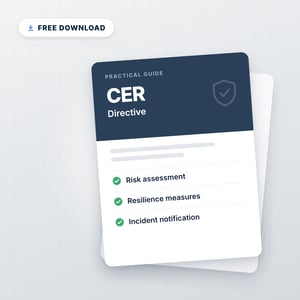
The CER Directive is EU law on the resilience of essential services, including large-scale industrial food production and processing. Critical entities must carry out a risk assessment, draw up a resilience plan and report significant incidents; Germany applies it through the KRITIS-Dachgesetz. Human Risks supports these steps with risk assessments and business continuity plans.
Human Risks and TAPA Regulations
TOUCH
TAPA Security Standards (FSR and TSR)

TAPA's Facility Security Requirements (FSR) and Trucking Security Requirements (TSR) are global standards for storing and transporting goods that thieves target, used in agreements between buyers and logistics providers. FSR-certified sites update their security risk assessment at least once a year, and Human Risks keeps those assessments for every site.
Human Risks and AEO
TOUCH
Authorised Economic Operator (AEO)

AEO is the EU customs status for trusted supply chain actors, including manufacturers. Its security and safety authorisation requires appropriate security and safety measures. Human Risks keeps the risk assessments and incident records behind them.
Human Risks and BRCGS, IFS Food, FSSC 22000
TOUCH
Food defence (BRCGS, IFS Food, FSSC 22000)

BRCGS, IFS Food and FSSC 22000 all include food defence requirements. FSSC 22000 requires a documented threat assessment and a food defence plan with mitigation measures. Human Risks keeps those threat assessments and incidents for every site.

Read the Customer Case Study

Crane Currency & Human Risks

See how Crane Currency went from days to hours preparing for audits.
Crane Currency Case Study - Graphic

Why Human Risks?

1
Built for Adoption.
Generate baseline assessments in minutes and assets in one click with tools built for end users rather than experts. Seamless adoption makes resilience part of your organizational culture.
2
Guided by Experts.
Methodologies refined through partnerships with global Fortune 500 organizations and 2,500+ professionals. Expert guidance gets you to value in weeks, and our 96% retention rate proves it.
3
Unified for Resilience.
Manage risk, compliance, and business continuity in one platform. AI-powered automation generates Risk Assessments and Impact Analysis in 15 minutes with 90% less manual work. ISO, NIS2, CER compliant.

See a security risk assessment
completed in 15 minutes

A live demo of Human Risks, built around your sites, threats and continuity plans.

Trusted by GSK, HSBC and IKEA · ISO 27001 certified

Frequently asked questions

What does manufacturing plant security cover? Manufacturing plant security protects a manufacturer's people, plants, warehouses and stock from theft, unauthorised access and disruption. It covers each factory and its storage areas, alongside business continuity planning for when a plant stops.
How do manufacturing companies manage physical security risk across multiple plants? By applying one risk assessment method to every plant and transport route, and keeping the results in one system. In Human Risks, you predefine asset types, threats and treatments in line with company policy and match them to site categories. Your team then assesses a components plant and a distribution centre against the same standard.
Does Human Risks support CER compliance? Yes, on the physical security and business continuity side. Germany's KRITIS-Dachgesetz, which applies the CER Directive, asks operators of critical facilities to report incidents within 24 hours and to plan measures such as access control, crisis management and alternative supply chains. Human Risks covers these with incident reports, risk assessments and business continuity plans.
Can guards and site staff report incidents from the plant? Yes. Guards and site staff report incidents and observations from each plant into Human Risks, where security leads see them across every site. At Crane Currency, reports from frontline guards feed the dashboards that leadership uses to follow security across its certified sites.
How long does implementation take? Human Risks customers see results within weeks, with expert guidance through onboarding. Support continues after launch, and 96% of customers stay with us long term.

Free resources