

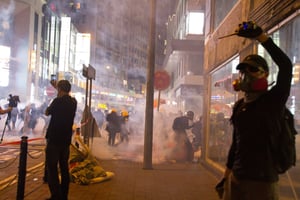
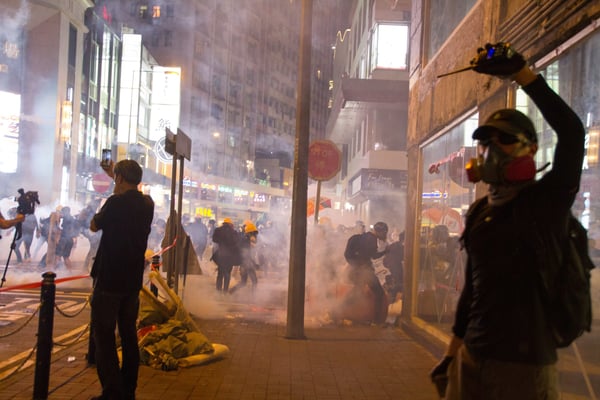
 Moreover, it seems that the number of those incidents is on the rise, as the last New Year celebrations have shown. On the eve of 2022, dangerous situations unfolded in Berlin, Paris and Stockholm. On top of that, various protests recently have taken place in China, France, Iran, Brazil, Peru and the UK, just to name a few. It is important to remember that not every case is going to turn violent - but sometimes even with security measures in place, things can go haywire. The 2021 "Save America" rally that resulted in the U.S. Capitol siege can serve here as a prime example – which is why it is so important to plan and prepare for such an occurrence beforehand. By planning ahead, you can effectively protect your employees and facilities.
But how can you approach it?
First, you may want to differentiate between the scenario where your organization is targeted directly, and the one where it is indirectly affected by the situation unfolding in its vicinity. The first case arguably holds more potential to turn violent and exceptionally dangerous, but the other also can have serious consequences. At the very least, a demonstration could prevent employees from leaving and accessing the facility. An even more serious scenario would involve the crowd gaining access to the facility/office and causing harm to employees and property, or leading to the loss of sensitive information.
The consequences of such an occurrence can be enormous.
Monitoring the situation around your area and reviewing available data might be a good place to start. Then, you might want to ask yourself some questions:
-
Are the protests and demonstrations common?
-
Do they often turn violent?
-
Is there a football stadium or other crowd-gathering places nearby?
-
Moreover, are the political tensions high?
-
Is local law enforcement efficient?
Answering those questions can help you estimate the probability of a dangerous case of civil unrest unfolding in your area. Then, good perimeter security, careful monitoring and regulated access to the facility are crucial to ensuring safety.
Lockdown and evacuation procedures should also be among the countermeasures. Moreover, a warning procedure and providing alternative entrances and exits can play a big part. Above all, if possible, this planning should be conducted in close collaboration with local authorities, to ensure good communication and effective cooperation in times of need.
And how do you plan for civil unrest?